

Realidad virtual Los auriculares han cambiado bastante durante la última década, y en su mayoría se han vuelto más potentes y asequibles. HTC Vive XR Elite, como el último Meta búsqueda profesional y tal vez manzana dispositivo esperadoplantea la pregunta: ¿Estamos realmente preparados para el auge del hardware de realidad virtual de más de 1000 dólares?

Watch this:
Super Small Vive XR Elite Doesn’t Quite Work For My Eyes
3:36
The $1,099 headset, available for preorder Thursday, is arriving by the end of February — remarkably soon for a CES product. That means it’ll be available alongside Sony’s PlayStation 5-connected PSVR 2. While less expensive than the Quest Pro, the XR Elite’s price costs about as much as buying a PS5 and a PSVR 2 together. It’s far from an impulse purchase. But the hardware, which shrinks down the VR form to a pair of nearly glasses-like goggles and includes mixed-reality capabilities that could allow for AR apps, looks to solve how we’ll be using the metaverse for more in our lives than just games, simulation and fitness.
Read more: The Wonders of CES 2023: 3D Laptops, Wireless TV and Shape-Shifting Screens
No other company has really cracked this challenge either. But this Vive headset looks, more than ever, like it’s a stepping stone to future AR glasses.
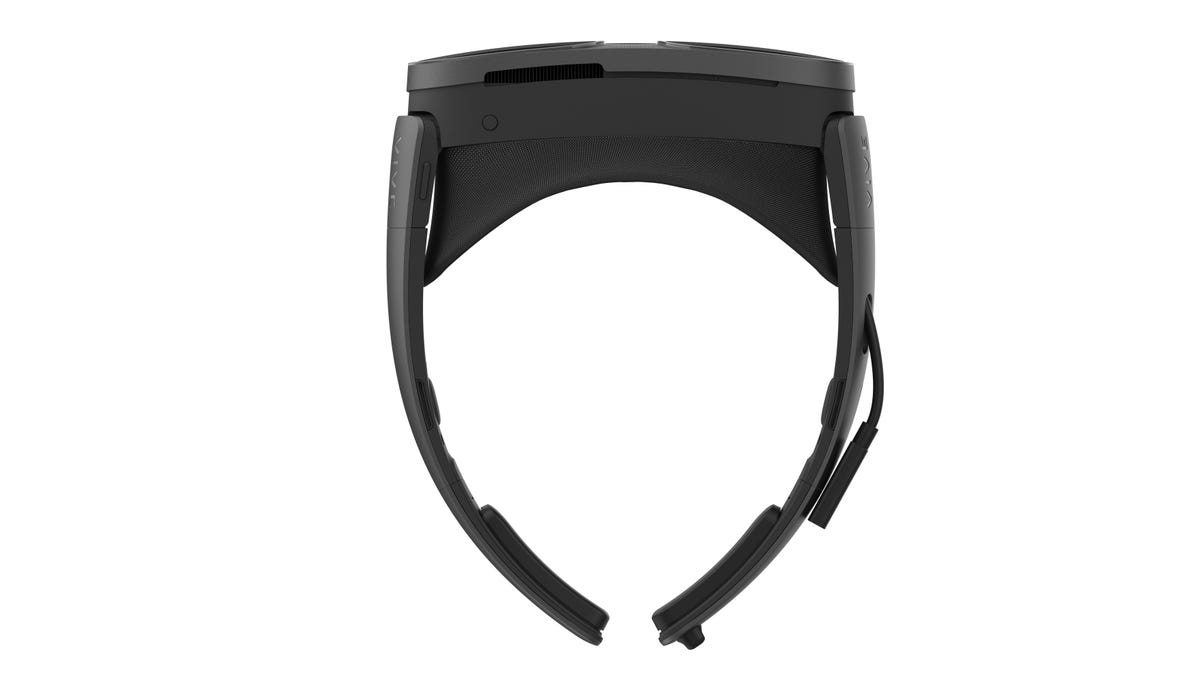
The XR Elite’s battery strap detaches, and glasses-like arms can be added on instead to reduce size further.
HTC
«We see where mixed reality is going to create a whole new suite of use cases. We know the virtual reality use cases are great. I think the AR side is amazing, too,» Dan O’Brien, HTC’s general manager of Vive, told me in a conversation at CES in Las Vegas. He acknowledged that HTC tried to make an AR device in 2015 but stopped because of the complications. O’Brien sees 5G and cloud computing as a key next step. «You need a 5G network, a really robust one to make AR go to scale — you need a cloud infrastructure to deliver to those types of wearables.»
The XR Elite is primarily a standalone VR headset, and it looks like an impressive piece of tech: It has a familiar Qualcomm Snapdragon XR2 chip much like the Meta Quest 2, Quest Pro and Vive’s existing business-focused Focus 3. But it adds a higher-resolution 110-degree field of view, LCD displays with 2K resolution per eye that can run at 90Hz. There’s also a boosted 12GB of RAM along with 128GB of storage. It can connect to PCs to run SteamVR or HTC’s VivePort software, or connect with Android phones. But its potential as a bridge to AR experiences seems like the most impressive feature.
Those are just specs, though. The XR Elite is a VR headset with a similar proposition to previous models, but with expanded capabilities. Its compact size is the most surprising part: At 340 grams, it’s less than half the weight of the Quest Pro. The rear hot-swappable battery gives about two hours of life. It gets even smaller by unclipping the back battery strap and adding glasses arms that can turn the headset into a modified pair of VR glasses, which could just plug into an external USB-C charger or battery for power. It’s small enough to fit in a compact carrying case tube.
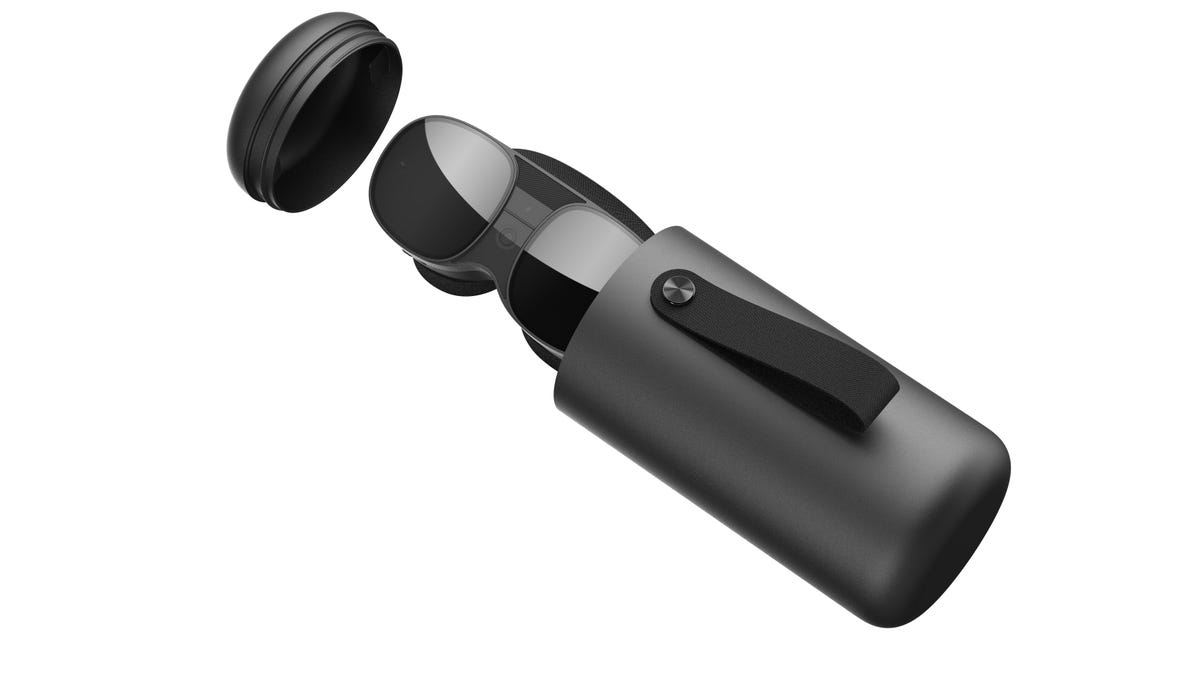
The XR Elite in its carrying case, which looks more portable than any other VR headset I’ve seen.
HTC
But that compact size comes with a twist: Instead of fitting on top of glasses, the XR Elite uses adjusting dials, or diopters, which can change the lens prescription on the fly without you needing to wear glasses at all — for some people, at least. The diopters only accommodate up to a -6 prescription, but my own vision is over -8 for nearsightedness. It’s a challenge HTC faced with its even smaller Vive Flow phone-connected VR goggles, which also went for the glasses-free approach.
The XR Elite has a dedicated depth sensor on the front, along with color passthrough cameras that can eventually show mixed reality-experiences, similar to the Quest Pro. The Quest Pro doesn’t have the Elite’s added depth sensor, but it accommodates for that with its onboard cameras.
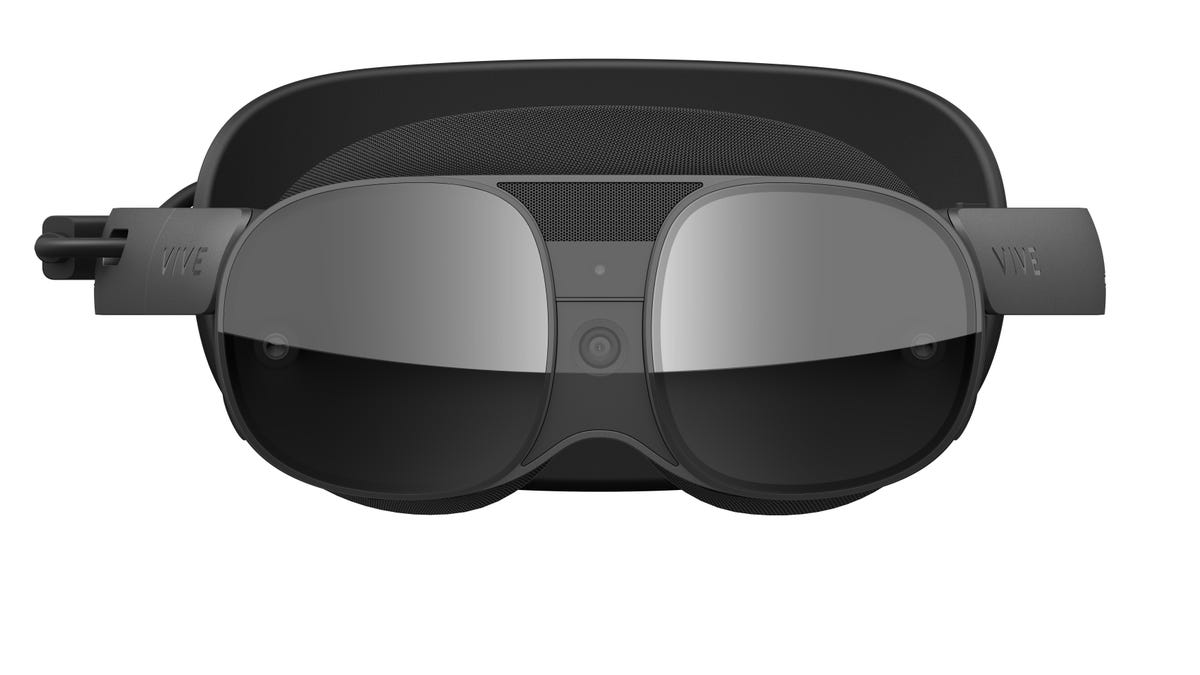
A front camera (part of an array for movement tracking), and also a depth sensor for measuring spaces and layering AR.
HTC
The XR Elite could also adapt further. While the hardware doesn’t have its own eye-tracking tools onboard, eye- and face-tracking add-ons are coming later in the year. The headset’s controllers are the same standard ones that HTC has for the Vive Focus 3, which follow the same game controller-like playbook as the Meta Quest 2 and others. But HTC already has its own line of wearable VR body trackers and wristbands, and more accessories could follow.
O’Brien acknowledges that the sticky, mass-market appeal of VR and AR aren’t here yet. «I think developers will be using cloud computing, being able to actually get their content into the metaverse much faster, and much more efficiently,» he said. «If you think about the streaming business, these streamers, these TikTokkers, all these kids that create the really compelling, fun experiences that just keep drawing you back in? That’s not in the metaverse today, We need to create more opportunities for less sophisticated immersive content creators to get involved, and then create more [of an] Economía».
O’Brien ve la computación en la nube, impulsada por la capacidad del seguimiento ocular para comprimir datos gráficos a través de una tecnología llamada representación elástica, como una forma de reducir los procesadores de los futuros auriculares, hacerlos más pequeños y adaptarse a más personas.
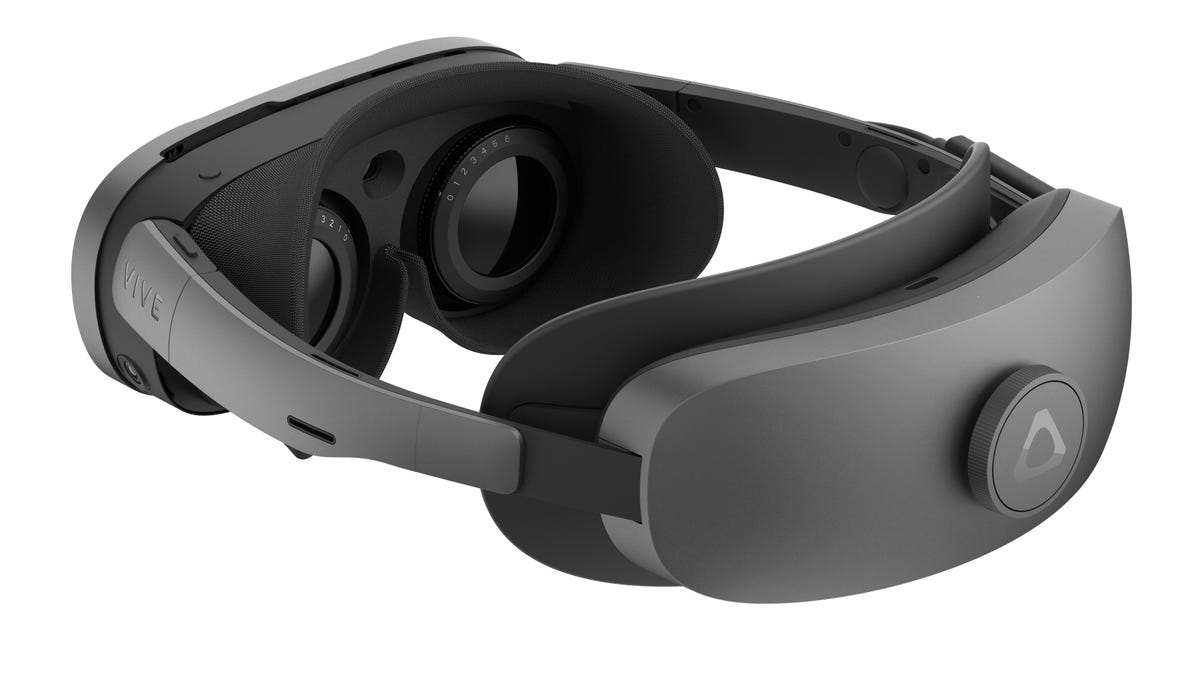
El auricular no funciona con gafas: en su lugar, tiene diales de dioptrías para ajustar las graduaciones en el interior.
htc
Mi preocupación son las opciones de prescripción limitadas en este momento. «A medida que tengamos acceso a anteojos más livianos, es probable que más personas les traigan sus recetas en el futuro», dice O’Brien. «En este momento, lo que podemos hacer es tratar de abordar la mayor parte del mercado lo mejor que podamos con este tipo de cambios de configuración, porque tenemos que hacer que los auriculares sean más ligeros. Tenemos que hacerlos más cómodos. Y si estás obtendrá esas grandes zonas de comodidad para los ojos dentro de estos auriculares, y seguirá siendo realmente grande».
O’Brien cree que los controladores VR incluidos pueden volverse opcionales algún día, posiblemente dejados fuera de la caja y comprados por separado, pero todavía no. El rastreo manual no es lo suficientemente confiable. «El trazado manual tiene que hacer un gran progreso en los próximos dos o tres años para que realmente se convierta en una herramienta de entrada más natural». Pero O’Brien sugiere que es una forma de obtener los auriculares asequibles del futuro. Si el usuario puede usar las gafas e interactuar con el contenido [with their hands]Este será un producto mucho más barato.

Este producto fue nombrado uno de los mejores productos de CES 2023. Consulte los otros Ganadores del premio Lo mejor de CES 2023.

Javier Marías es colaborador en El Demócrata, donde cubre temas de actualidad, política, negocios, tecnología, deportes, entretenimiento y estilo de vida. Su trabajo se centra en ofrecer información clara, útil y bien contextualizada, acercando a los lectores noticias, tendencias y acontecimientos relevantes para comprender mejor el mundo que los rodea.